Political Parties in a Comparative Perspective (Winter term 2025/26)
Content
This seminar deals with a critical actor in representative democracies: political parties. The course is structured along four segments. The first block seeks to introduce students to the topic. Methodologically, we will learn how to approach and critically assessing the course literature. Substantively, we will discuss the importance to understand of party democracy. The second block is dedicated to the origins of political parties. We will explore how institutions and societal developments contribute to their emergence. In a third block, we will learn about their functions in democracies. We will start with their recruiting functions and assess the implications of candidate selection methods for democratic representation? Thereafter, the following three sessions deal with parties as electoral organizations. How do parties appeal to their voters? On which agenda do they decide and which groups do they target? How do they respond to their competitors? The final block is reserved for the presentation of students' projects.
You can download the most recent version of the syllabus here.The seminar takes place weekly, on Wednesday (16:15-17:45) in seminar room SCH 100.124.
Material
Week 1: Introduction
In this session, we will get to know each other and discuss some logistics about the seminar. Moreover, a brief introduction into the topic is given.Slides
Week 2: Research Design
In this session, we will discuss essentials about academic research methods.Slides
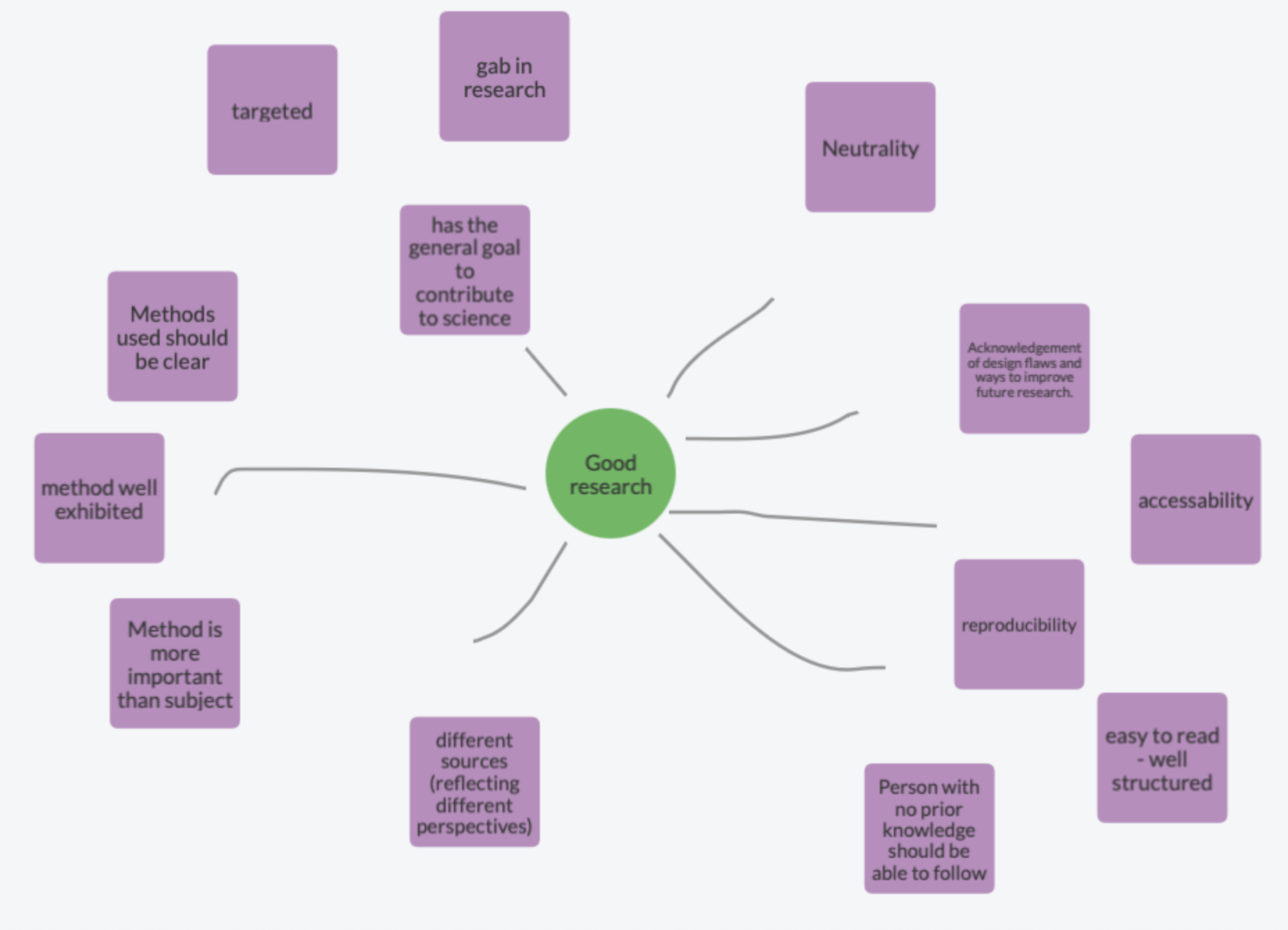
Mindmap on good research
Week 3: Why Parties?
Why do we need political parties in democracies? We will discuss whether democracies need parties and develop some working definition of political parties.Slides
Week 4: Institutions and Party Systems
In this session, we will focus on how institutions shape party systems’ origins.Slides
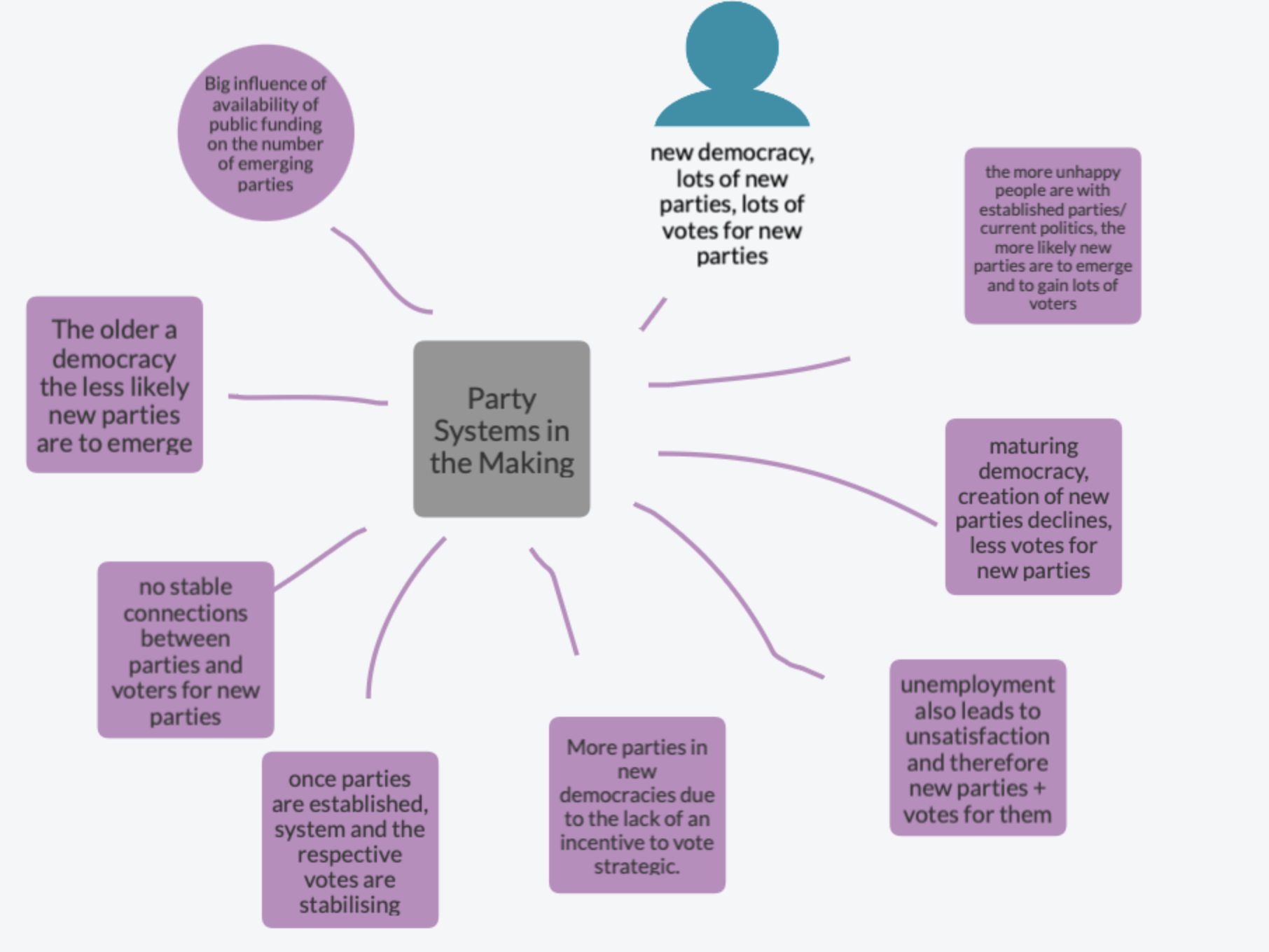
Mindmap (Tavits 2008)
Week 5: Political Cleavages
Are the roots of party origins tied to social conflict lines? And how have these conflicts changed over time? We will discuss the idea of political cleavages and their recent transformations.Slides
Week 6: Candidate Selection
This session marks the beginning of the third block of this seminar which deals with the functions of political parties in representative democracies. We will zoom in on their ‘recruiting function’ and discuss different means of candidate selection and their implications.Slides
Week 7: Preference Articulation and Aggregation
In this week, we'll speak about parties' articulating function: how do they decide on their programmes?Slides
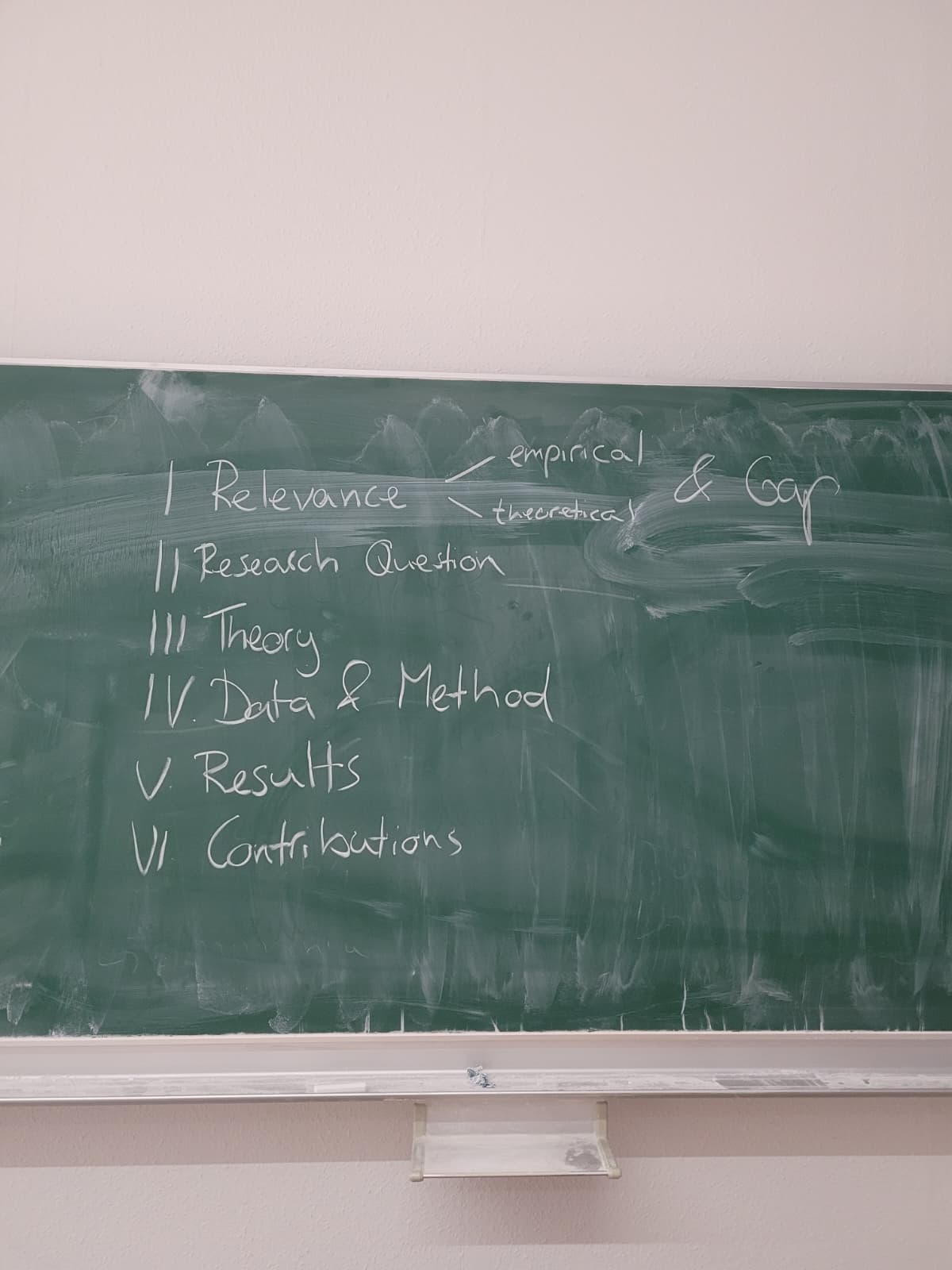
Structure of introductions
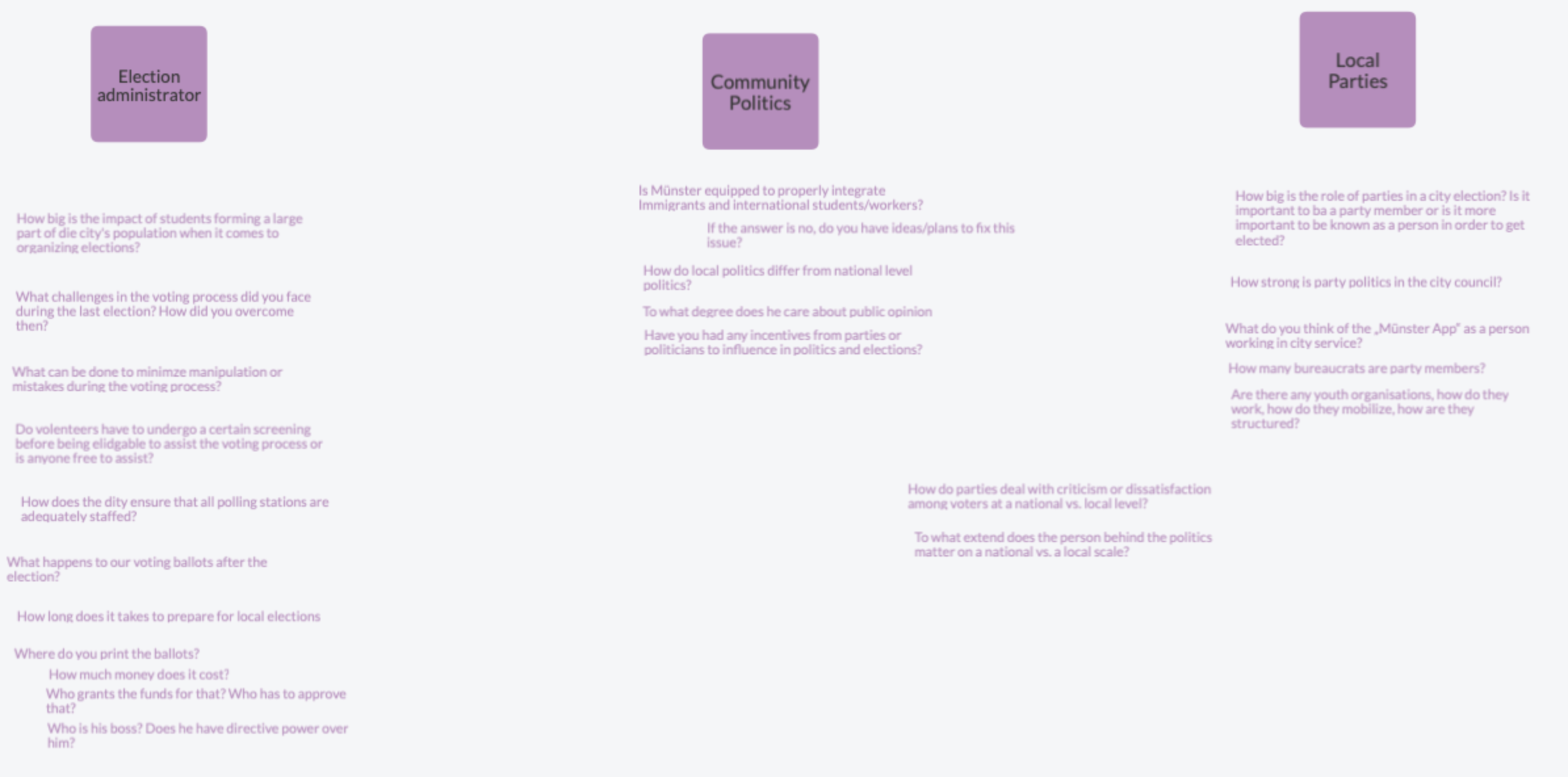
Brainstorming (questions for practitioners)
Week 8: Visit by practitioners
We welcome Thomas Paal and Julia Dickfer as our guests. They will give an input on the job of election administrators, the structure of local politics and how parties work on a local level.Week 9: Mobilization and Competition
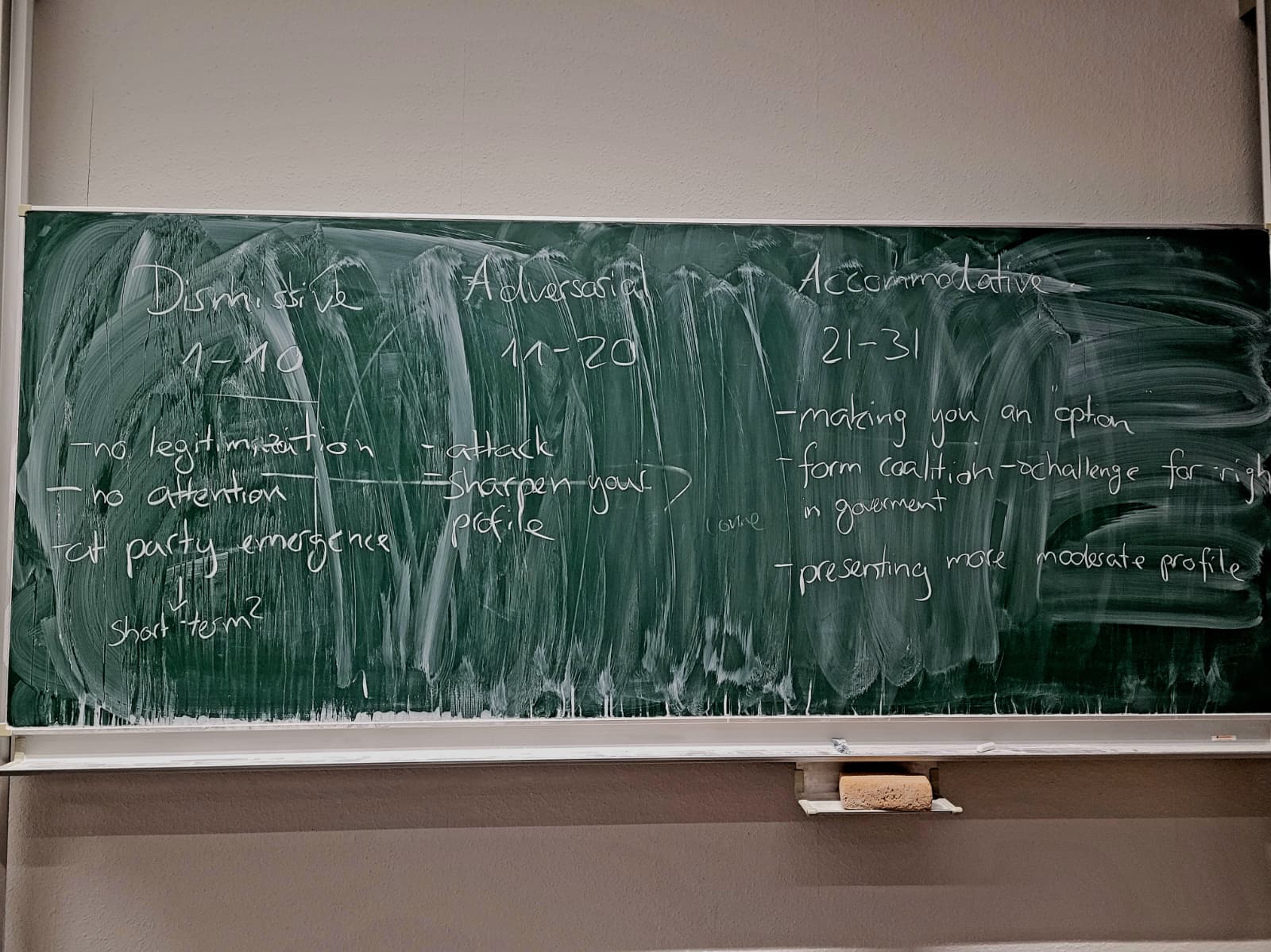
In this week, we zoom in on party competition. Specifically, we discuss how mainstream parties can react to the emergence of a new party, and which strategies prove to be successful.Slides
Strategies against challengers
Week 10: Governing and Research Questions
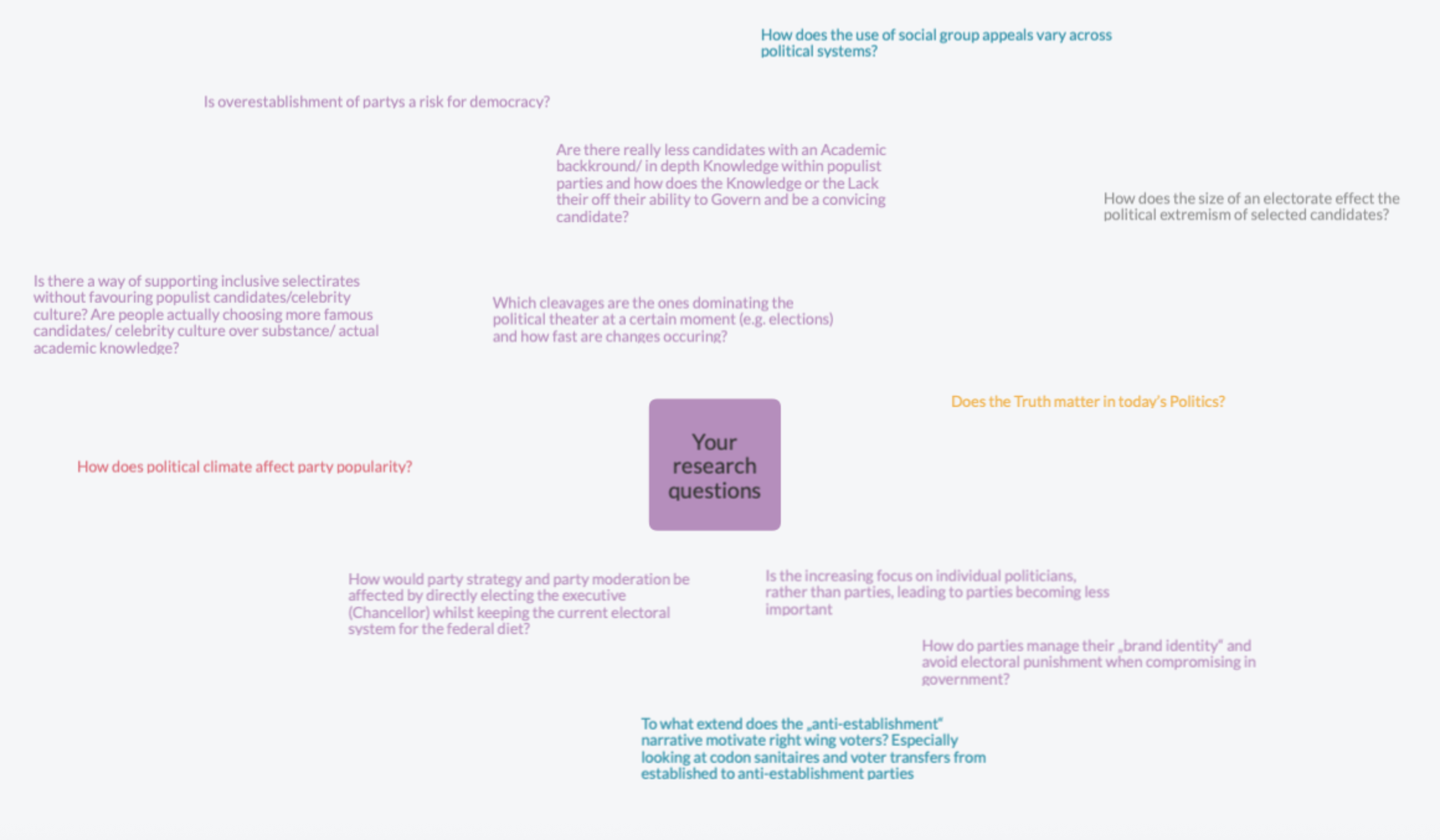
This session fulfils a dual purpose: first, in a meta session, we deal with what makes a research question a good one and develop your questions for the oral exam. Afterwards, we discuss parties' role in government and how they solve the dual task of confrontation and compromise.Slides
Research questions
Week 11: Developing an argument
This week, we will start developing a theory on our research question. We will learn what a theory is comprised of, what makes a good theory and how we can translate a theory into testable hypotheses.Slides
Week 12: Data and Methods
Our final session on research design is dedicated to the selection of the proper data and methods. We will translate our theoretical concepts into empirically measurable indicators, discuss case selection, methodological options and introduce different data sources one can use to study voters and political parties. Slides
Week 13: Project presentations and wrap-up
This is our final session which allows you to present your research projects to your peers. Moreover, we will reflect on the seminar's learning outcomes and discuss expectations regarding the oral exam. Slides