Gender and Political Representation (Summer term 2026)
Content
This seminar deals with the (under)representation of women in politics. The course follows an empirical, comparativist approach. After reaching a basic understanding of crucial concepts in the study of gender, we will assess how a lack of women in politics translates into a gap in substantive representation. Moreover, we will assess how gender norms, a crucial determinant of women's underrepresentation in politics, are transmitted intergenerationally. In the second part of the seminar, we will read several papers that test how gender inequalities are affected by cultural and institutional factors, and how how gender gaps are maintained through demand- and supply-side dynamics. In a final block, we will critically evaluate different mechanisms tackling gender inequalities in politics, such as quotas, role models and language. In session 12, Simone Wendland, who is a member of parliament for the CDU in the North-Rhine Westfalian state parliament, will visit us to discuss her experience of being a woman in politics.
You can download the most recent version of the syllabus here. If you plan to submit a term paper in the context of the seminar, please note the following guidelines.The seminar takes place weekly, on Wednesday (10:15-11:45) in seminar room SCH 100.125.
Material
Week 1: Introduction (15 April 2026)
In this session, we will get to know each other and discuss some logistics about the seminar. Moreover, a brief introduction into the topic is given.Slides
Week 2: Concepts (22 April 2026)
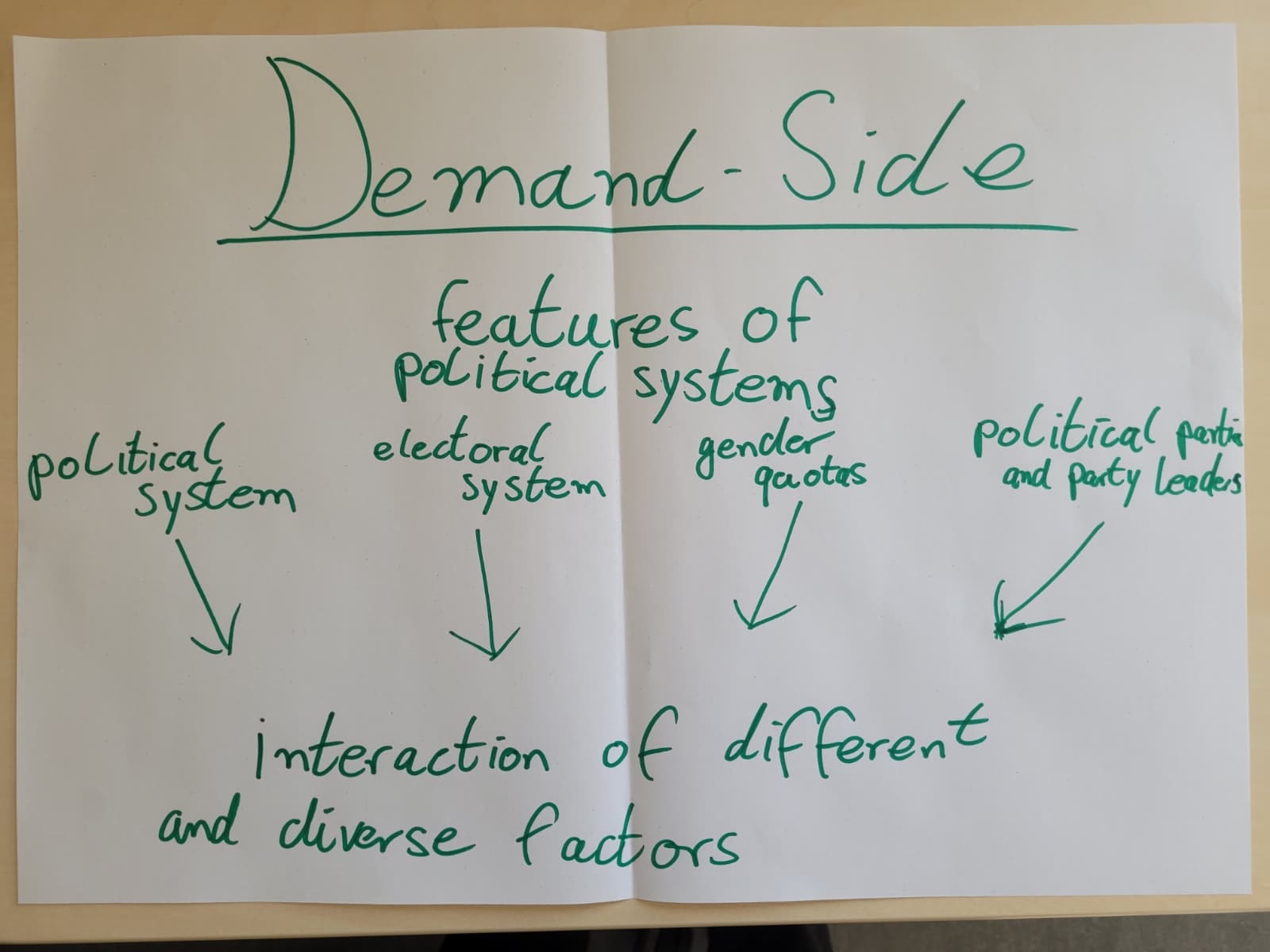
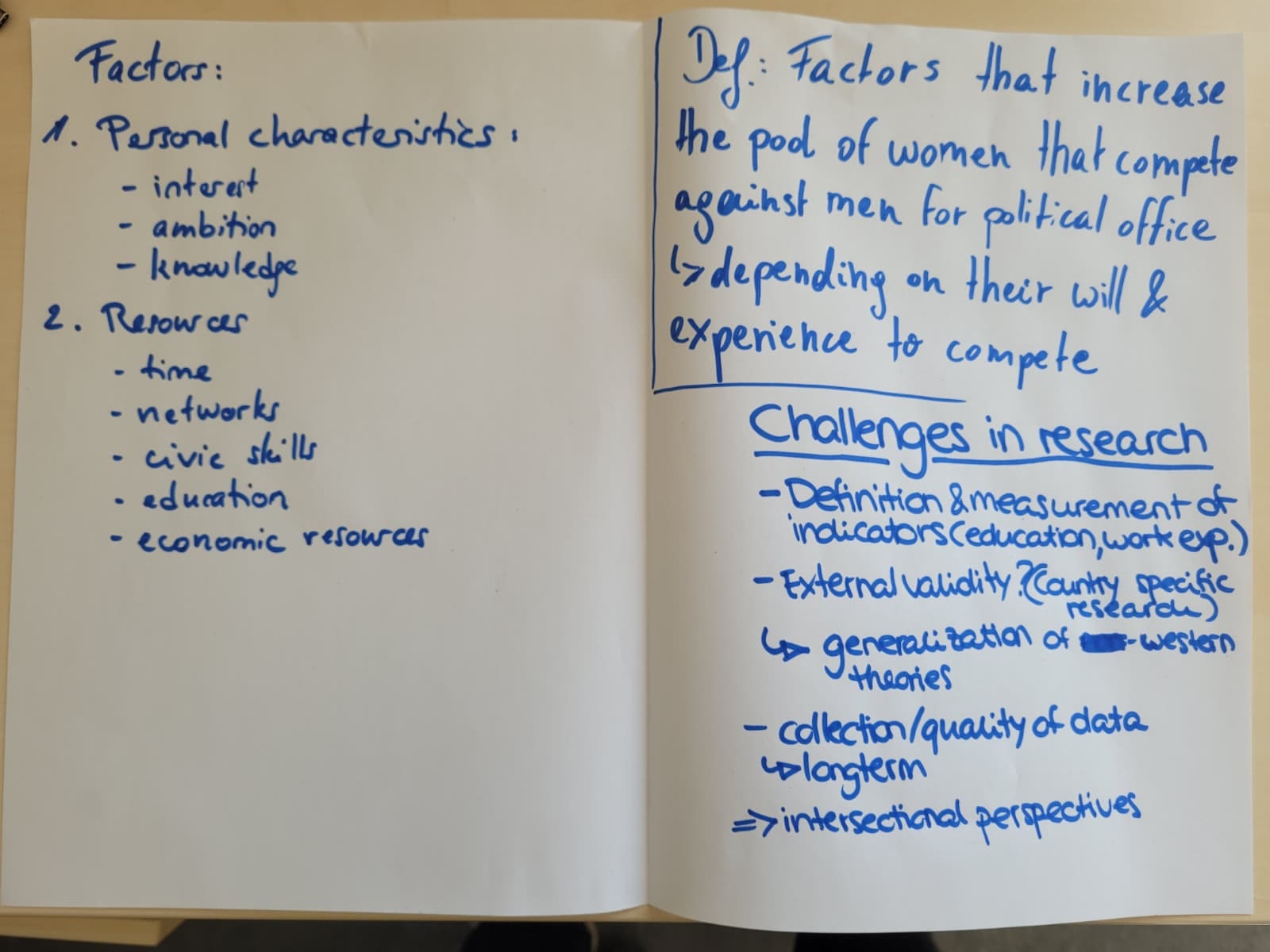
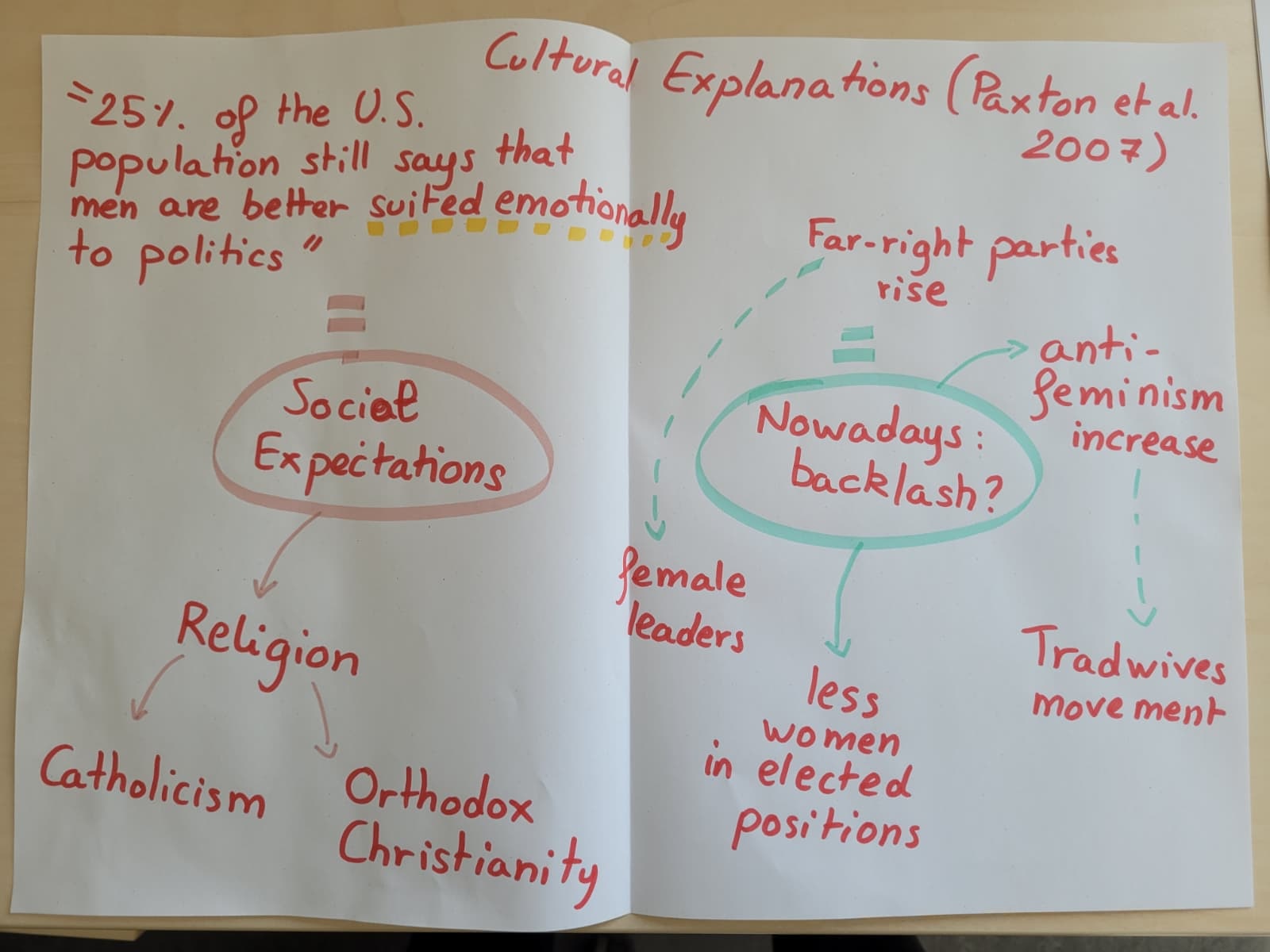
We will introduce crucial concepts in the study of gender in politics, and talk about prominent explanations of women's under-representation in politics.Slides
Demand-side explanations
Supply-side explanations
Cultural explanations
Week 3: Representation
This week, we deal with different conceptualizations of representation and debate whether descriptive representation can foster gender equality in politics.Slides
Week 5: Norms and their Legacies
Norms are essential for social order. They shape how we think and behave. In this week, we'll discuss what norms are and apply them to an empirical case. Specifically, we will discuss how an agricultural reform -- the emergence of the plough -- has reinforced gendered household division with lasting effects up until today.Slides
Week 6: Institutions
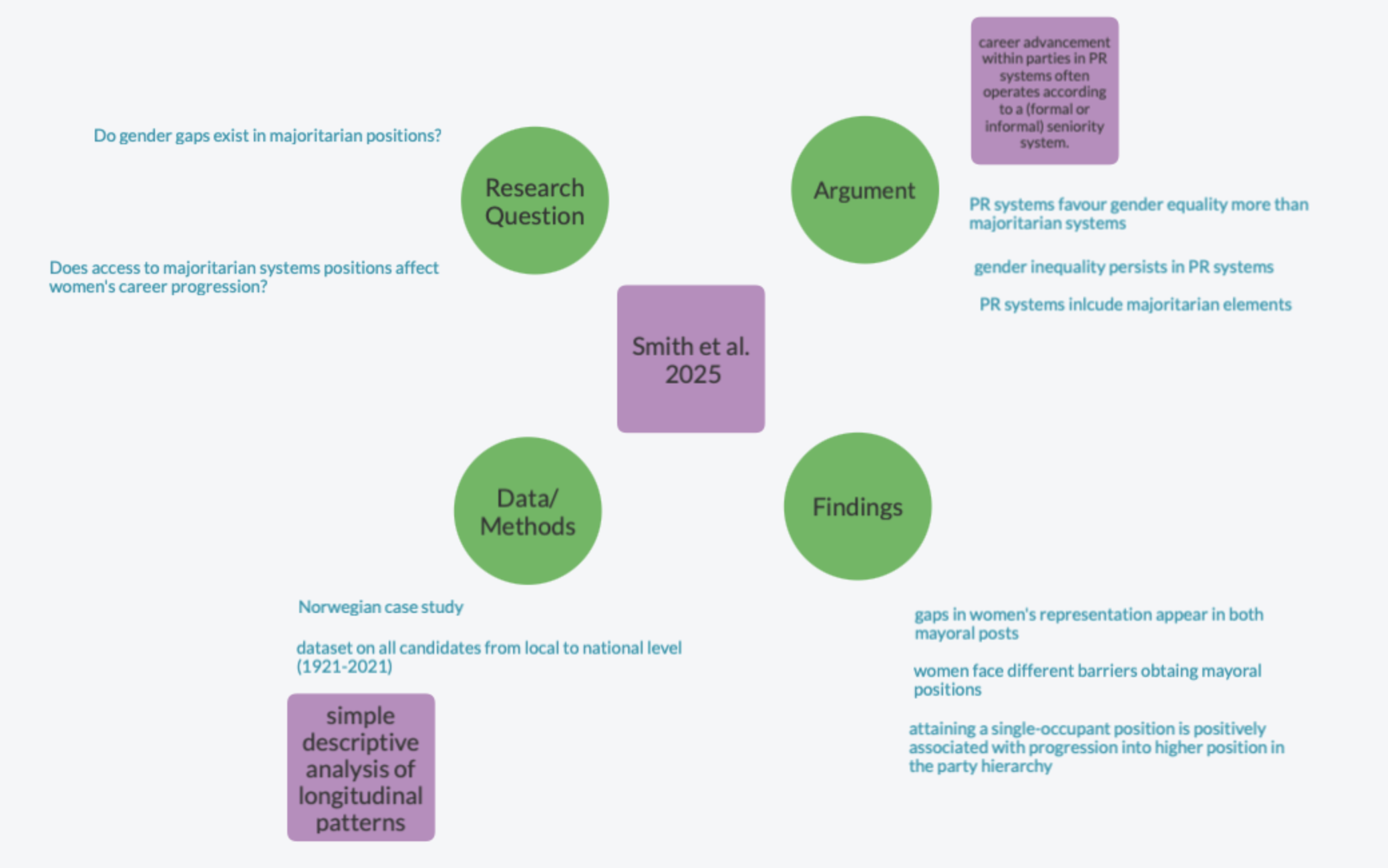
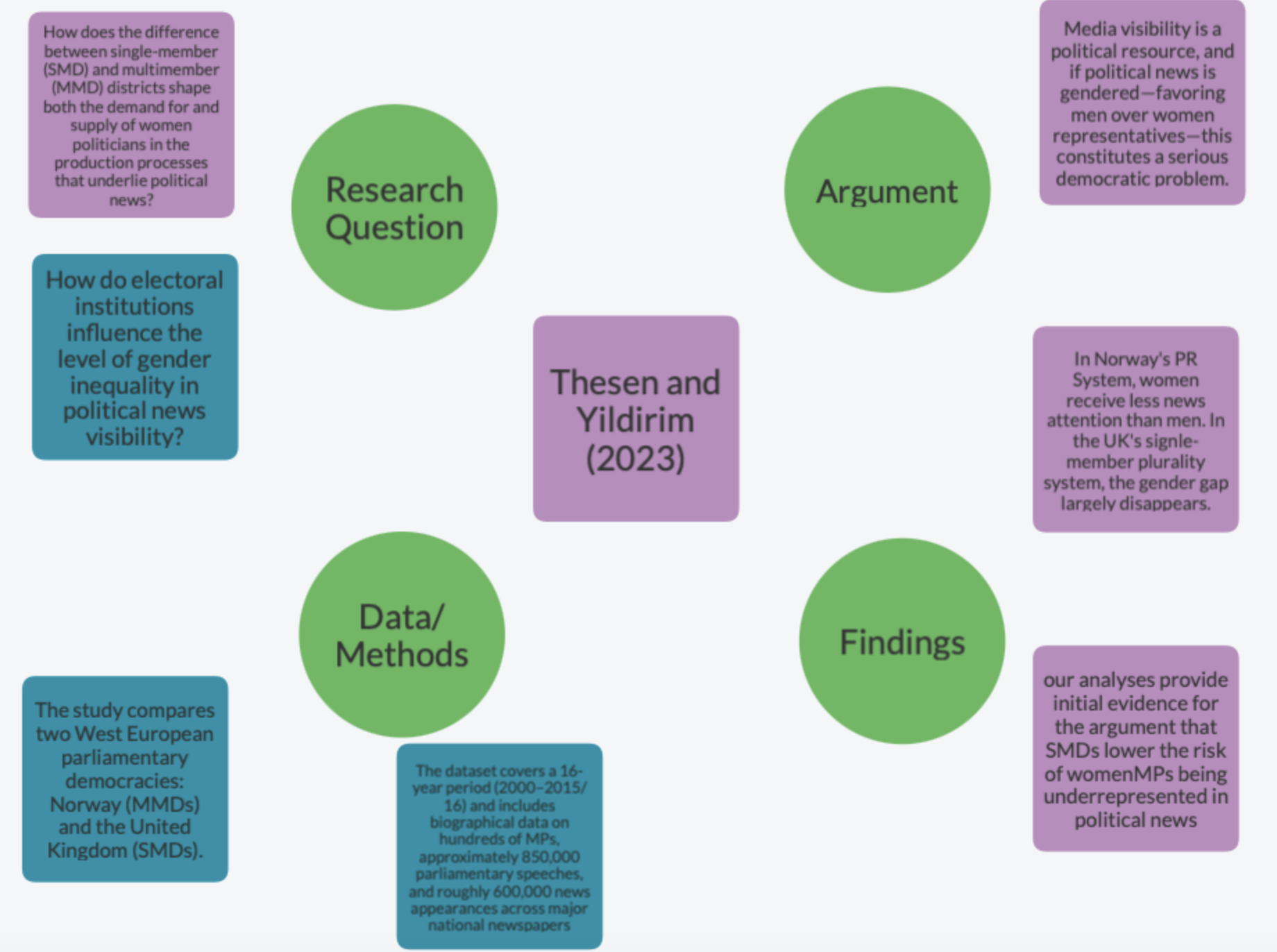
This week, we discuss the role of political institutions, such as the electoral system, for the representation of women in politics.Slides
Comparison (board)
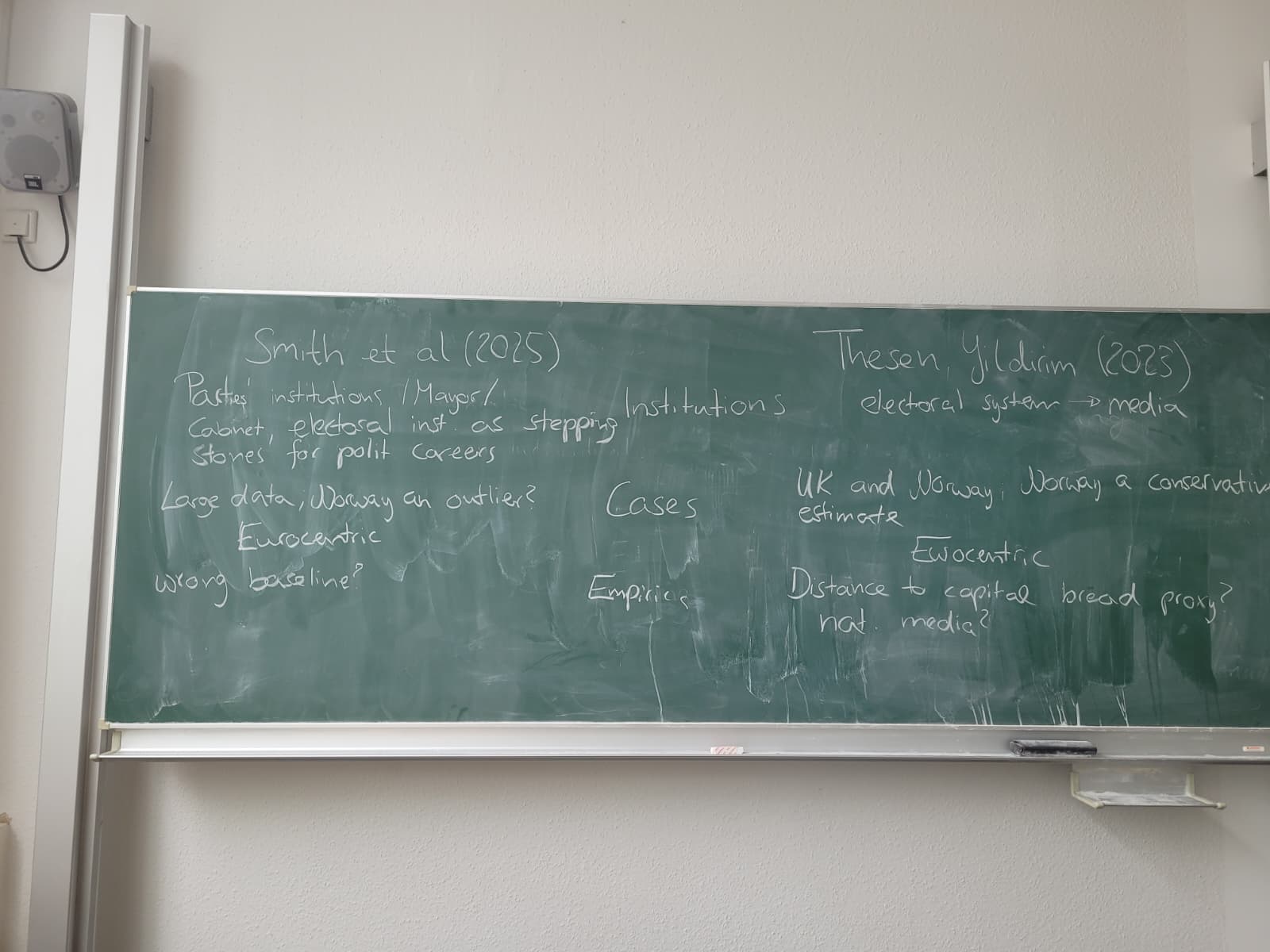
Summary (Smith et al. 2025)
Summary (Thesen, Yildirim 2023)
Week 7: Demand-side biases
Is their backlash or bias against women's representation? In this session, we will discuss, based on different survey experiment on voters' perceptions of political candidates, whether voters attach different levels of competency and expertise to female candidates than to male candidates, and how this shapes their political persuasion.Slides
Week 8: Candidates
Prior to this week, we have assumed that women are actually considering running for office. This week, we will analyse how structural factors reduce women's expressive ambition to run for office.Slides
Week 9: Institutional Fixes
From this week onwards, we evaluate different tweaks that are (un)intentionally designed to improve women's representation. This week, we'll focus on institutions.Slides
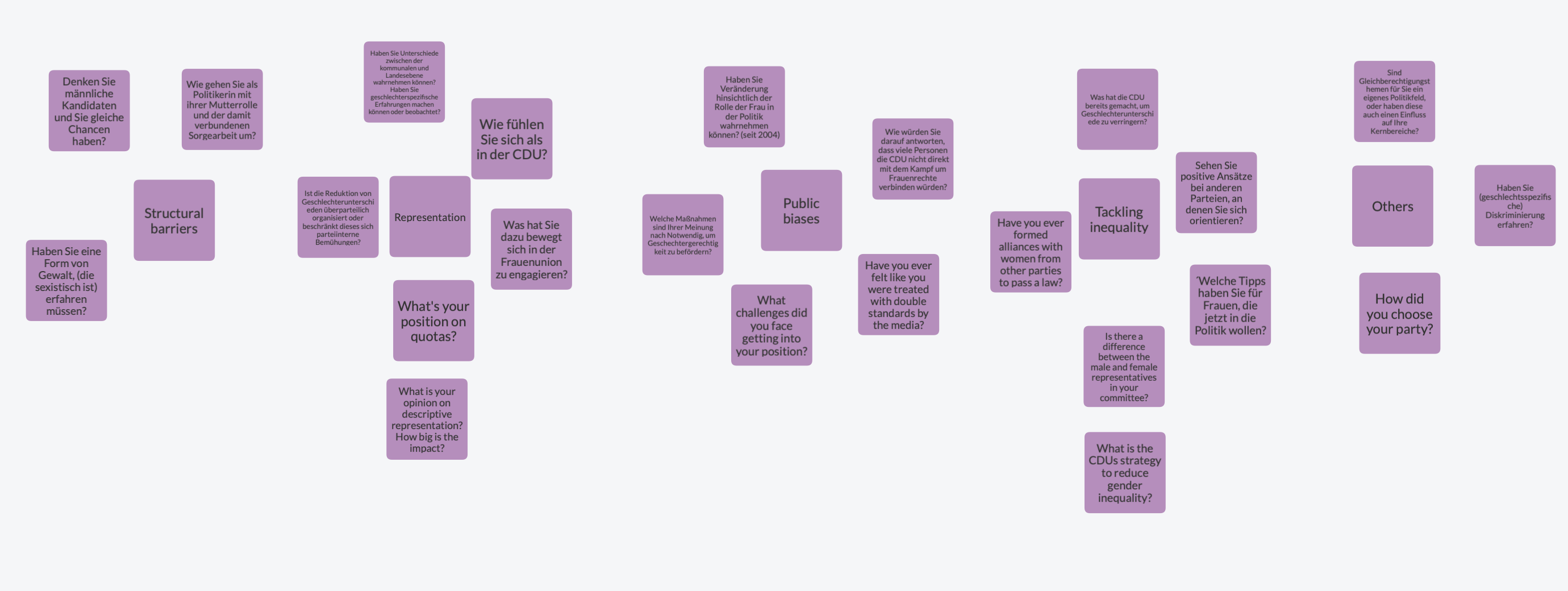
Questions (next week)
Week 10: Visit by Simone Wendland
This week, Simone Wendland, MP for the CDU in the state parliament of North-Rhine Westphalia will visit our seminar to engage in a discussion on women's experiences in politics.Week 11: Role Models
Do women in office serve as role models for potential future female candidates? In this session, we will assess the idea of "critical masses", and how they (might) contribute to women's decision of pursuing a political career.Slides
Week 12: Culture
We've already talked about how the plough introduced a gendered division of the household. This week, we switch to matrilineal societies in Mali and study how they helped to bolster female participation in politics. Moreover, we will learn how to be a (fair) reviewer of political science articles.Slides
Week 13: Wrap-Up
In our final session, we reflect on our learning outcomes, and discuss common challenges in writing papers in political science.Slides